

From 3 videos
What are the best carbs to eat for fat loss after 40?
Answered by Nikkiey Stott and her guests · Updated
The short answer
Nikkiey says the best carbs for fat loss after 40 are mostly slow-digesting, complex ones: oats, sweet potatoes, brown rice or quinoa, sprouted grain or sourdough bread, and lentil or chickpea pasta. If whole grains bloat you, white rice or cream of rice work well around workouts. No carb is banned; just make complex carbs the majority.
Hear Nikkiey answer it
Tap play to start right where it's answered. It keeps playing while you browse.
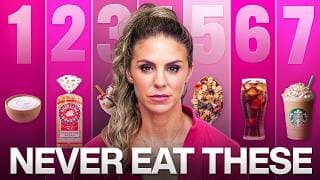
Nikkiey's slow-digesting swaps for white bread, rice and pasta after 40
Plays from 5:35 · Video: 7 Foods to Limit for Menopause Belly Fat and Easy Swaps
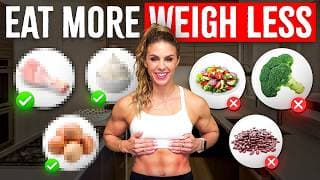
Why white rice or cream of rice can beat whole grains if they bloat you
Plays from 7:08 · Video: 8 Foods to Build Lean Muscle After 40: A Grocery List
Nikkiey on why no carb is bad but complex carbs should be the majority
Plays from 2:01 · Video: How Many Calories to Drop in a Cut Before a Big Event
The full answer
First, keep the carbs. Nikkiey explains that when you cut them too low, you don't burn more fat, you just burn out: your energy drops, your recovery tanks and your workouts suffer. Slashing carbs might move the scale for a while, she says, but it isn't sustainable and it leaves you irritable. Your body needs carbs to build and repair muscle. What changes after 40, according to Nikkiey, is that your body doesn't process sugar and carbs the way it used to, so the quality of the carbs matters more than it did in your 20s.
Her everyday swaps for refined carbs, which she says burn fast and leave you crashing and hungry again:
- White bread to sprouted grain or sourdough
- White rice to quinoa or brown rice, for more fiber and longer fullness
- Regular pasta to lentil or chickpea pasta, for extra protein
- Oats, whole wheat bread, sweet potatoes and some fruit as your daily base; an apple or orange brings fiber and water that help control appetite
There is one nuance worth knowing. In her lean muscle grocery list, Nikkiey points out that whole grains can feel heavy and cause bloating for a lot of women over 40. If that's you, white rice or cream of rice are gentle, easy to digest and fast fuel, especially around your workouts paired with egg whites or another protein. Jasmine rice, sushi rice and rice cakes work the same way. Outside that workout window, she leans on slower options like sweet potatoes, oats or cream of wheat.
And no, a cookie won't wreck you. Nikkiey is clear there's no such thing as a bad carb. Have the piece of chocolate; just don't build most of your day around it, because it won't give you the nutrition complex carbs do. If carbs have felt like the enemy, it was the plan that failed you, not your body.
From Nikkiey Stott and WarriorBabe's coaching. For education, not medical advice: talk to your doctor about your own health.
Women also ask
More questions →Diets, Fasting & Diet Culture
Is diet soda better than regular soda for weight loss?
Not necessarily. Nikkiey explains that diet soda isn't the clear win it looks like. Artificial sweeteners trick your taste buds into expecting sugar, and when it doesn't arrive you can end up craving more, snacking more, and finding belly fat harder to lose. She suggests sparkling water with fresh citrus or iced herbal teas instead.
Read the answer →
Diets, Fasting & Diet Culture
Why am I not losing weight on 1,200 calories?
Eating 1,200 calories is often too little, not too much. Dr. Stacy Sims explains it sits around an average resting metabolic rate, so your body treats it as a threat, conserves energy and breaks down lean mass. Long-term dieting also adapts your metabolism down. Before cutting further, check your tracking is accurate.
Read the answer →
Diets, Fasting & Diet Culture
Do carbs make you gain weight?
No. Nikkiey explains that carbs on their own don't make you gain fat. Eating more calories than your body burns does, whether those calories come from carbs, fat or protein. Carbs are stored as glycogen, which holds about three grams of water per gram, so the scale can rise temporarily without any fat gain.
Read the answer →
Watch or listen in full
More on this topic → 12 min
8 Foods to Build Lean Muscle After 40: A Grocery List
Video · Oct 25, 2025
 10 min
7 Foods to Limit for Menopause Belly Fat and Easy Swaps
Video · Feb 28, 2026
 11 min
How Many Calories to Drop in a Cut Before a Big Event
Video · Feb 11, 2022