

The short answer
Build muscle. Nikkiey calls it the number one way to speed up your metabolism, because muscle is more metabolically active than fat and burns more calories even at rest. That means consistent strength training, paired with eating enough to fuel it, rather than chasing more cardio or cutting calories further.
Hear it answered
Tap play to start right where it's answered. It keeps playing while you browse.
Nikkiey names the number one way to speed up your metabolism
Plays from 2:49 · Ep. 93: How to Speed Up Your Metabolism by Building Muscle
How Nikkiey raised her own BMR through eight years of strength training
Plays from 3:38 · Ep. 21: How to Increase Your Daily Calorie Burn: BMR, NEAT, TDEE
Why muscle raises BMR, and why undereating stalls your results
Plays from 5:13 · Ep. 108: How Building Muscle Boosts Your Metabolism After 40
Why lifting burns calories all day even when your watch says it didn't
Plays from 11:12 · Ep. 93: How to Speed Up Your Metabolism by Building Muscle
Muscle as a calorie furnace when metabolism slows in menopause
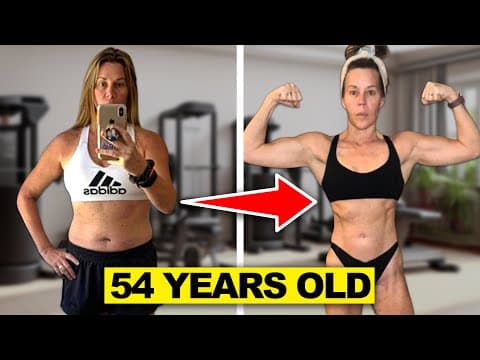
Plays from 5:42 · Ep. 98: Why Build Muscle During Menopause? 4 Key Reasons
The full answer
On Ep. 108, Nikkiey explains that muscle raises your basal metabolic rate (BMR), the calories your body needs just to breathe, circulate blood and repair cells. The more muscle you carry, the more you burn at rest. On Ep. 21 she uses herself as the example: she estimates her BMR went from around 1,300 calories to at least 1,600 over eight years of strength training. Ep. 98 describes muscle as an almost covert calorie furnace, which matters because metabolism tends to slow with age and through menopause.
Don't judge a lifting session by your watch. On Ep. 93, Nikkiey points out that strength workouts often don't show many calories burned, but afterward your body gets to work repairing and building muscle, spreading that burn across the rest of the day. Cardio, she says, tends to push the body to conserve energy instead. On Ep. 21 she adds that you can raise exercise calorie burn by increasing the frequency, intensity or duration of your workouts, so put real effort behind them and challenge yourself.
The other half is food. On Ep. 108, Nikkiey warns that some women eat at or below their BMR range, then wonder six months later why nothing is working. They simply aren't giving their body enough, especially while asking it to strength train. On Ep. 93 she explains that feeding your body appropriately and eating more throughout the day while you build muscle helps speed up your metabolism. Ep. 21 also notes that sleep and stress management have a significant impact on your results.
If years of eating less and doing more cardio haven't worked, your metabolism isn't the problem. The plan was. Lift consistently, fuel the muscle you're building, and give it time.
From WarriorBabe's coaches (how we write our answers). For education, not medical advice: talk to your doctor about your own health.
Women also ask
More on Metabolism, Eating More & Reverse Dieting →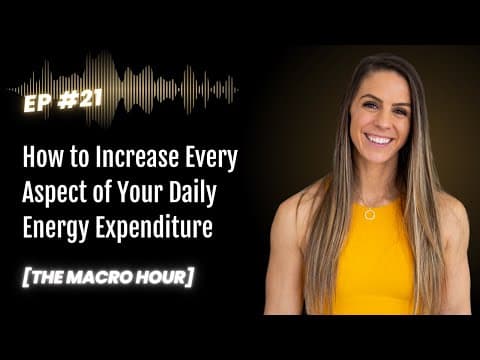
Metabolism, Eating More & Reverse Dieting
What is TDEE?
TDEE stands for total daily energy expenditure: the total calories your body burns in a day. Nikkiey explains it adds up your BMR, NEAT, TEF (digesting food) and EAT (exercise). It's essentially your maintenance number, the calories that keep your weight where it is, which tells you how much to eat to lose, maintain or gain.
Read the answer →

Metabolism, Eating More & Reverse Dieting
What is BMR and how can I increase it?
BMR, or basal metabolic rate, is the calories your body needs at rest for basic functions like breathing, circulating blood and repairing cells. Nikkiey explains that the way to raise it is to build muscle through strength training, because muscle is more metabolically active than fat and burns more calories at rest.
Read the answer →

Metabolism, Eating More & Reverse Dieting
What is a metabolism retrain phase?
A metabolism retrain phase is a deliberate, gradual, tracked increase in calories and macros over time, designed to wake up a metabolism that has adapted to years of dieting. Instead of jumping straight to maintenance or a surplus, Nikkiey has you raise intake week by week until your body stabilizes at a true maintenance level.
Read the answer →

Metabolism, Eating More & Reverse Dieting
Should I eat the BMR number a calculator gives me to lose weight?
No. Nikkiey Stott explains that your BMR is only what your body burns at rest: sitting, talking and breathing. Walking, workouts and daily movement add to that and can push your real needs well above it. Instead of eating your BMR, she says to follow the WarriorBabe calculator, which accounts for your activity and your goal.
Read the answer →

Metabolism, Eating More & Reverse Dieting
When should I stop dieting and eat at maintenance?
Nikkiey says it's time to move to maintenance when you've reached your goal, hit a plateau that won't budge for weeks, or your body starts pushing back. That means energy and gym performance drop, hunger is constant, mood or sleep suffer, or you're mentally burned out from dieting, often after months in a deficit.
Read the answer →

Metabolism, Eating More & Reverse Dieting
Will I gain weight when I start eating more?
Probably a little, and that's expected. Nikkiey explains that when you start eating more during a retrain or reverse diet, your weight will usually fluctuate about two to five pounds from water, glycogen, food volume and salt, not fat. If the gain keeps climbing or holds around five pounds, the increase was likely too fast.
Read the answer →
Work out yours
All calculators →Watch or listen in full
More on this topic → 25 min
How to Speed Up Your Metabolism by Building Muscle
Episode 93 · Sep 18, 2023
 19 min
How Building Muscle Boosts Your Metabolism After 40
Episode 108 · Dec 1, 2023
 7 min
Why Build Muscle During Menopause? 4 Key Reasons
Episode 98 · Oct 6, 2023