

From 1 episode and 4 videos
Should I avoid fat in my meals before and after a workout?
Answered by Nikkiey Stott and her guests · Updated
The short answer
Not entirely, but keep it low. Nikkiey keeps fat on the lower end in the meal before and the meal after training because fat, at 9 calories per gram, takes about twice as long to digest and can slow your use of the protein and carbs that fuel your lift and start recovery. Eat your fats at other meals.
Hear Nikkiey answer it
Tap play to start right where it's answered. It keeps playing while you browse.
Nikkiey on why fat stays out of her post-workout meal and where it does its job
Plays from 6:24 · Ep. 184: What to Eat After a Workout for Muscle Recovery
Why fats around training slow your use of carbs and protein for fuel and recovery
Plays from 29:41 · Video: Plan Macros the Night Before and Time Fats Around Workouts

Her pre-workout oatmeal meal with just 4 grams of fat, and why she builds it that way
Plays from 13:50 · Video: How to Plan a 150g Protein, 2,000 Calorie Day in Advance

Why she'd drop the peanut butter from a pre-workout yogurt bowl
Plays from 0:56 · Video: 5-Minute High-Protein Breakfasts and Their Macros
Where your fats go in the day when you train after your second meal
Plays from 26:22 · Video: Plan Macros the Night Before and Time Fats Around Workouts
The full answer
Nikkiey explains that around training she wants her body focused on giving her energy, not on digesting. In her video on timing fats, she says that eating around 10 grams of fat or more near a workout, from peanut butter, olive oil, avocado or a heavy, fat-dense meal, keeps your body busy digesting the fat instead of taking up the carbs and protein that fuel the session and aid recovery. On Ep. 184 she adds that fat doesn't do much post-workout anyway. It does its job in your other meals.
Here is what that looks like on her own plate:
- Pre-workout oatmeal: 382 calories, 58g carbs, 24g protein, 4g fat, eaten 60 to 90 minutes before lifting.
- A post-workout meal: 309 calories, 38g protein, 38g carbs, 2g fat.
- Post-workout bagel with egg whites: she leaves out the whole egg to keep fat down but still adds a little cream cheese, landing around 10g fat.
- A yogurt and granola bowl: 4.5g fat without peanut butter. One tablespoon brings it to 13g, which she calls a bit on the higher side for a pre-workout meal.
Low is not zero, and this is not about cutting fat from your day. Nikkiey says your daily fats stay the same. You simply place them in the meals away from training, like breakfast, a morning snack, or dinner, depending on when you work out.
On Ep. 184 she also adds some perspective. Consistently hitting your daily macros matters more than any timing rule, so if you miss your post-workout meal, don't stress. Eat when you get home. She also says to pay attention to how your own body handles different meals after training. Timing fats is a useful tweak, not a test you can fail.
From Nikkiey Stott and WarriorBabe's coaching. For education, not medical advice: talk to your doctor about your own health.
Women also ask
More questions →
Meal Prep & Workout Nutrition
Should I eat before a morning workout?
Yes. On The WarriorBabe Show, Nikkiey says to eat something before you lift, however early. A small protein-and-carb snack is enough, like a banana and a protein shake. Dr. Stacy Sims suggests about 15g protein and 30g carbs. Then have a real breakfast with protein and carbs 30 to 45 minutes after training.
Read the answer →

Meal Prep & Workout Nutrition
Is it bad to lift weights on an empty stomach?
Nikkiey doesn't call fasted lifting bad for everyone, but if your goal is to build muscle or tone up, she says it works against you. Muscle is active tissue that needs fuel, so without food your body can break down muscle for energy. Fasted cardio like walking or cycling is a different story.
Read the answer →
Meal Prep & Workout Nutrition
How soon after a workout do I need to eat?
You don't need to rush a shake within 30 minutes. On Ep. 364, Nikkiey explains that the post-workout window is real but wider than people think, with muscle protein synthesis elevated for up to 24 to 48 hours. She recommends a protein-containing meal within about an hour to an hour and a half after training, and never four hours later.
Read the answer →
Watch or listen in full
More on this topic → 18 min
5-Minute High-Protein Breakfasts and Their Macros
Video · Mar 24, 2024
 21 min
How to Plan a 150g Protein, 2,000 Calorie Day in Advance
Video · Jan 22, 2024
 29 min
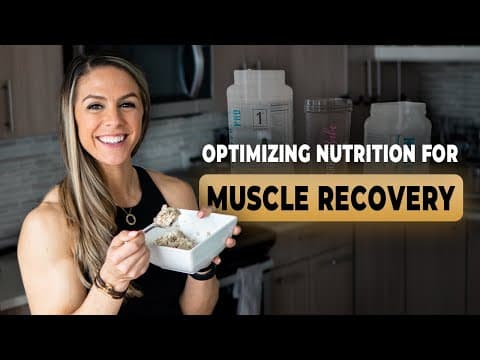
What to Eat After a Workout for Muscle Recovery
Episode 184 · Aug 26, 2024