

From 3 episodes
How do I stop feeling guilty after overeating?
Answered by Nikkiey Stott and her guests · Updated
The short answer
Stop feeling guilty after overeating by naming the regret, offering yourself a self-compassion statement, reframing it as one moment rather than your whole story, then pivoting to one helpful action in the next hour. Nikkiey's point: a few days off plan is not failure, and punishing yourself with less food or extra exercise is not the fix.
Hear Nikkiey answer it
Tap play to start right where it's answered. It keeps playing while you browse.
Nikkiey walks through her four-step ritual to release guilt after overindulging
Plays from 7:57 · Ep. 274: How to Get Back on Track After a Holiday Weekend
Britley Williams on separating the data from the drama after eating off plan
Plays from 30:18 · Ep. 90: What Is Somatic Therapy and How Can Breathwork Help You?
Why planned treats and grace beat a punishment workout the next day
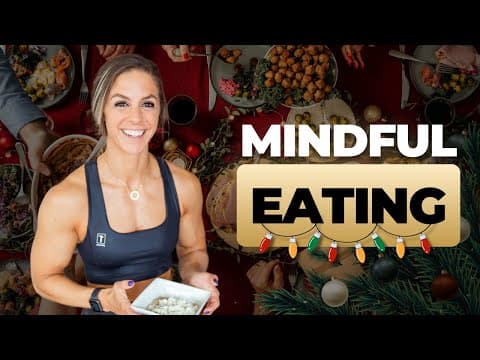
Plays from 7:28 · Ep. 218: How to Eat Mindfully During the Holidays Over 40
Nikkiey on resetting without slashing calories or burning it off in the gym
Plays from 10:14 · Ep. 274: How to Get Back on Track After a Holiday Weekend
The full answer
On Ep. 274, Nikkiey explains that guilt and regret can be sticky, and that regret dims your momentum. Her ritual to release it:
- Name it: "I feel like I overindulged, and I'm regretting that."
- Say a self-compassion statement: "I celebrated, I lived fully and I deserve to reset."
- Reframe it: "That was a moment, not my whole story," or "a few days, not my whole year."
- Pivot: do something different in the next 30 minutes to an hour, like a walk or focusing on hydration.
What you do next matters as much as the mindset. Nikkiey is clear that you don't need to slash calories, eat less or move more the next day. Eat meals with lean protein, veggies and healthy fats, move intentionally and return to your normal weekly routine. On Ep. 218 she adds that running five miles or working out extra hard to make up for dinner means you're still beating yourself up and still acting as if you lost control.
On Ep. 90, breathwork facilitator and lifestyle coach Britley Williams offers a useful filter: separate the data from the drama. The data is that you ate a cookie or skipped a meal. The drama is "I suck, I need to work it off, I knew I couldn't do this." She describes eating the same cookie with shame versus enjoying it at a girls' night as two completely different experiences, and says the real work is clearing the stories you've attached to food.
The longer-term fix, per Nikkiey on Ep. 218, is to stop banning foods. Treat foods as neutral and plan your favorite treats into your week in moderation, so having them doesn't feel like breaking the rules. One event won't make or break your progress; your consistency around it will. If the guilt keeps coming back, that's a sign the plan is too rigid, not that you lack willpower.
From Nikkiey Stott and WarriorBabe's coaching. For education, not medical advice: talk to your doctor about your own health.
Women also ask
More questions →
Food Noise, Cravings & Overeating
How do I stop snacking at night in front of the TV?
Change the setup instead of trying harder. Nikkiey's approach is to eat a high-protein dinner late enough that you aren't genuinely hungry when you sit down, keep trigger foods out of the house, and change what you do on the couch. When the urge hits anyway, pause and ask whether you're hungry or just bored.
Read the answer →

Food Noise, Cravings & Overeating
What is the difference between hunger and a craving?
Hunger is a general need to eat, like needing a meal, and it builds gradually with physical cues such as a rumbling stomach. A craving is an intense desire for one specific food, like chips, ice cream, pizza or chocolate. Nikkiey explains cravings often hit fast and are frequently driven by stress, boredom or even celebration.
Read the answer →

Food Noise, Cravings & Overeating
Why do I get cravings at night?
According to Nikkiey, night cravings usually mean you under-fueled during the day, most often by not eating enough protein. She says it's rarely a willpower problem. Skimp on protein and overall food, and your hunger and blood sugar get out of balance, so by evening your body is asking for everything at once.
Read the answer →
Watch or listen in full
More on this topic → 16 min
How to Get Back on Track After a Holiday Weekend
Episode 274 · Jul 7, 2025
 1 hr 2 min
What Is Somatic Therapy and How Can Breathwork Help You?
With Britley Williams
 21 min
How to Eat Mindfully During the Holidays Over 40
Episode 218 · Dec 23, 2024