

From 1 episode
If I still get regular periods in my 40s, can I still get pregnant?
Answered by Nikkiey Stott and her guests · Updated
The short answer
Not necessarily. On Ep. 339 of The WarriorBabe Show, reproductive endocrinologist Dr. Jaime Knopman explains that you can keep having periods into your 50s, but egg quality may be so reduced that it wouldn't lead to a healthy pregnancy. Her shorthand: menses does not equal motherhood. Talk to your doctor about your own situation.
Hear Nikkiey answer it
Tap play to start right where it's answered. It keeps playing while you browse.
Dr. Knopman on why regular periods don't mean you can still get pregnant
Plays from 7:12 · Ep. 339: Fertility After 35: Egg Freezing, IVF and Perimenopause
Dr. Knopman on genetics, stress and what really drives egg quality
Plays from 7:59 · Ep. 339: Fertility After 35: Egg Freezing, IVF and Perimenopause
The episode opener: periods into your 50s don't equal fertility
Plays from 0:00 · Ep. 339: Fertility After 35: Egg Freezing, IVF and Perimenopause
The full answer
When Nikkiey asked Dr. Jaime Knopman, a double board certified reproductive endocrinologist and director of fertility preservation at CCRM Fertility in New York, about the biggest misconceptions women have about their fertility window, she named this one first: the belief that it just goes on and on. A regular cycle feels like proof that everything is still working. Dr. Knopman's point is that the period and the egg are two different things. She coined the phrase "menses does not equal motherhood" during her fellowship to make exactly that point.
So a period on schedule tells you your cycle is still running. It does not tell you that the eggs you're releasing are of a quality that would translate into a healthy pregnancy. Dr. Knopman says that by later in life, egg quality can be so far reduced that it wouldn't.
Nikkiey followed up with the question many women ask next: can you improve egg quality, and do stress or burnout play a role? Dr. Knopman said we're an amalgamation of many factors, but the primary driver is genetics. She shared her own experience with breast cancer at a young age despite eating well and exercising, as an example of how we can't overrun our genetics. She was clear that being healthy still matters, because a healthier body supports a healthier pregnancy. But she pushed back on the idea that eating right or taking the right supplement can reverse what genetics sets in motion.
If you're in your 40s and wondering what your own cycle means for pregnancy, whether you're hoping to conceive or not, that's a conversation to have with your doctor or a fertility specialist. The episode's message is simply this: don't read a regular period as a guarantee either way. It's information, not the whole picture.
From Nikkiey Stott and WarriorBabe's coaching. For education, not medical advice: talk to your doctor about your own health.
Women also ask
More questions →
Women's Health & Aging
How long does perimenopause last?
Perimenopause can last anywhere from about one to 12 years, depending on the woman and who you ask. On Ep. 339, Dr. Jaime Knopman puts it at one to six or seven years. On Ep. 207, menopause consultant Hatty McCafferty says roughly four to 12 years, with earlier onset possible for some women of color.
Read the answer →
Women's Health & Aging
Does strength training help bone density in menopause?
Yes. Nikkiey explains that strength training puts stress on your bones, which triggers them to rebuild stronger and denser, raising bone mineral density and lowering osteoporosis risk as estrogen drops in menopause. On the show, she and guest Sal Di Stefano agree that walking and cardio don't come close to resistance training for bone.
Read the answer →
Women's Health & Aging
Can I strength train after a knee or hip replacement?
Yes, according to several women on The WarriorBabe Show who did it. Johanna lifts three days a week after two total knee replacements and says she has no programming limitations. Peggy started about four to five months after her surgeries with one modified session a week. Follow your surgeon's guidance and modify every movement.
Read the answer →
Watch or listen in full
More on this topic →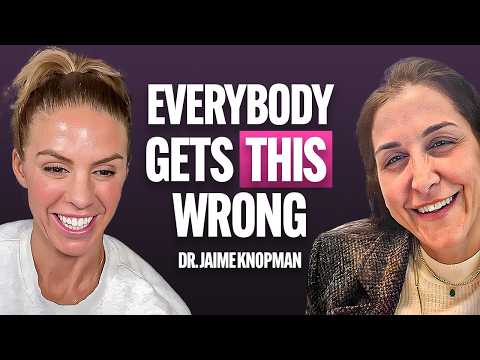 31 min
Fertility After 35: Egg Freezing, IVF and Perimenopause
With Dr. Jaime Knopman