

Free tool
Ideal Weight Calculator for Women
A healthy weight range for your height, from the BMI range and four published formulas, because no single number is right for everyone.
A healthy weight for your height
111–150 lb
The healthy-BMI range at your height
| Robinson (1983) | 127 lb |
|---|---|
| Miller (1983) | 132 lb |
| Devine (1974) | 126 lb |
| Hamwi (1964) | 125 lb |
There's no single ideal number. Two women at the same weight can look completely different depending on muscle. A goal based on how you look, feel and perform beats one off a chart.
Get a coach to adjust these with youNumbers are a starting point. A coach changes them as your body answers.
How your numbers are worked out
- 1The healthy-BMI range at your height, plus the Robinson, Miller, Devine and Hamwi formulas. Why
- 2Set goals on how you look, feel and perform, not only the scale. Why
For education, not medical advice. On a GLP-1 medication, pregnant, or managing a medical condition? Set your numbers with your doctor.
Questions women ask
What is my ideal weight?
There isn't one number. For your height, the healthy-BMI range is a sensible window, and where you feel and perform best inside it depends on your muscle.
Why do ideal weight formulas disagree?
They were built decades ago from different data, mostly to dose medication. They're estimates, which is why we show a range.
Should I aim for the low end of the range?
Not by default. A slightly higher weight with more muscle usually looks, feels and ages better than a lower weight reached by dieting.
Go deeper
How to Get Toned
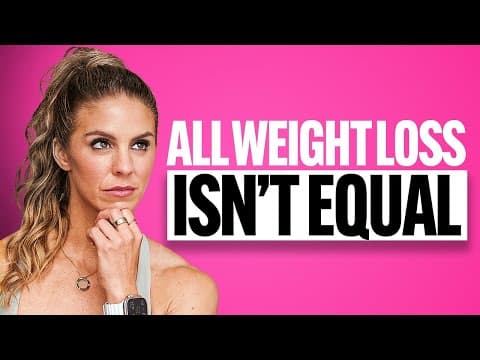
Can you weigh more and look leaner?
Yes. Nikkiey started her journey at 140 pounds and skinny fat, and now weighs 145 to 150 pounds with a smaller waist, visible abs and stronger legs. Muscle is denser than fat and takes up far less space, so building it while losing fat can make you leaner even as the scale holds steady or rises.
Read the answer →

The Scale & Tracking Progress
How can I track progress without the scale?
Track the changes the scale can't show: waist and body measurements, side-by-side progress photos, how your clothes fit, and whether you're lifting more than two weeks ago. Nikkiey also watches energy, sleep, cravings, recovery and habits like hitting protein and showing up to train. The scale becomes supporting data, not the decision maker.
Read the answer →