

From 1 episode and 2 videos
Does walking after meals help with weight loss?
Answered by Nikkiey Stott and her guests · Updated
The short answer
It helps, but not mainly by burning calories. Nikkiey explains that a short walk after eating helps your muscles pull glucose from your bloodstream with less insulin. That matters more after menopause, when insulin resistance rises. She also links post-meal walks to less bloating, steadier energy and no afternoon crash.
Hear Nikkiey answer it
Tap play to start right where it's answered. It keeps playing while you browse.

Nikkiey on why post-meal walks are about insulin, not calories, after menopause
Plays from 4:02 · Video: 7 Simple Daily Habits for Losing Fat After Menopause
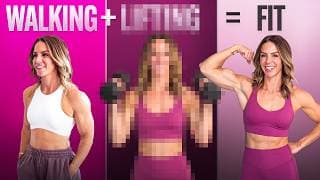
Why walking after dinner is a key blood sugar tool, and the 15-20 minute target
Plays from 8:05 · Video: 10,000 Steps a Day Not Working? What to Add After 40
How a 10-15 minute walk after a big meal eases bloating and prevents a crash
Plays from 12:38 · Ep. 238: Is Walking Enough for Fat Loss After 40?
Nikkiey maps post-meal walks into a weekly plan, five out of seven days
Plays from 10:47 · Video: 10,000 Steps a Day Not Working? What to Add After 40
The full answer
In her video on daily habits for fat loss after menopause, Nikkiey is clear that the post-meal walk isn't about calories or hitting a step count. It's about insulin sensitivity. After menopause your body has a harder time managing glucose from food. When you walk after a meal, your working muscles pull that glucose out of your bloodstream without needing as much insulin. Over time, she says, that improves how your body handles every meal. She shares that when she stopped running for hours and started walking after meals instead, her bloating went down, her energy held through the afternoon, and the midday crash she'd accepted as part of getting older disappeared.
How long to walk depends on which episode you're listening to, so here's the range she gives:
- Five minutes after each of your three main meals, because your body responds to the timing more than the duration.
- 10 to 15 minutes after a big meal, which she says on Ep. 238 helps stimulate digestion, reduce bloating, stabilize blood sugar and prevent an energy crash.
- 15 to 20 minutes after your largest meals, most importantly dinner, on at least five days a week.
The common thread is consistency right after eating. Even five minutes counts.
Where the post-meal walk fits in fat loss: Nikkiey places walking under NEAT, all the movement you do outside your workouts. She calls walking after meals one of the most powerful blood sugar tools for women in perimenopause and menopause. It works alongside strength training, short conditioning sessions and nutrition. It doesn't replace them. On Ep. 238 she says 8,000 to 12,000 steps a day is the sweet spot for overall health and fat loss, and post-meal walks are an easy way to build toward that. If you've been grinding through long cardio without results, this is a simpler habit, not a harder one.
From Nikkiey Stott and WarriorBabe's coaching. For education, not medical advice: talk to your doctor about your own health.
Women also ask
More questions →
Fat Loss After 40
How many steps a day should I walk to lose fat?
Nikkiey recommends 8,000 to 12,000 steps a day for fat loss, and says it doesn't have to be exactly 10,000. If you're well below that now, build up gradually, adding 1,000 to 2,000 steps a week, instead of jumping straight to the target. Walking works best alongside strength training and the right nutrition.
Read the answer →
Fat Loss After 40
Is 10,000 steps a day based on science?
No. Nikkiey explains the 10,000-step goal came from a 1965 Japanese pedometer whose name translates to "10,000 steps meter," not from a doctor, researcher or study. Walking is still worth doing. She suggests 7,000 to 10,000 steps for general health and insulin sensitivity, but not as your main fat loss tool.
Read the answer →
Fat Loss After 40
Why can't I lose weight after 40 even though I eat less and exercise more?
Nikkiey's answer: your body after 40 doesn't respond to restriction the way it did at 25. Eating less and doing more signals stress, so your body lowers your metabolic rate, raises cortisol, breaks down muscle and holds on to fat. The fix she teaches is more food, more protein, strength training and recovery, not further cuts.
Read the answer →
Watch or listen in full
More on this topic → 20 min
Is Walking Enough for Fat Loss After 40?
Episode 238 · Mar 3, 2025
 13 min
7 Simple Daily Habits for Losing Fat After Menopause
Video · Oct 24, 2026
 16 min
10,000 Steps a Day Not Working? What to Add After 40
Video · Jul 9, 2026